
What Is Media Buying Guide
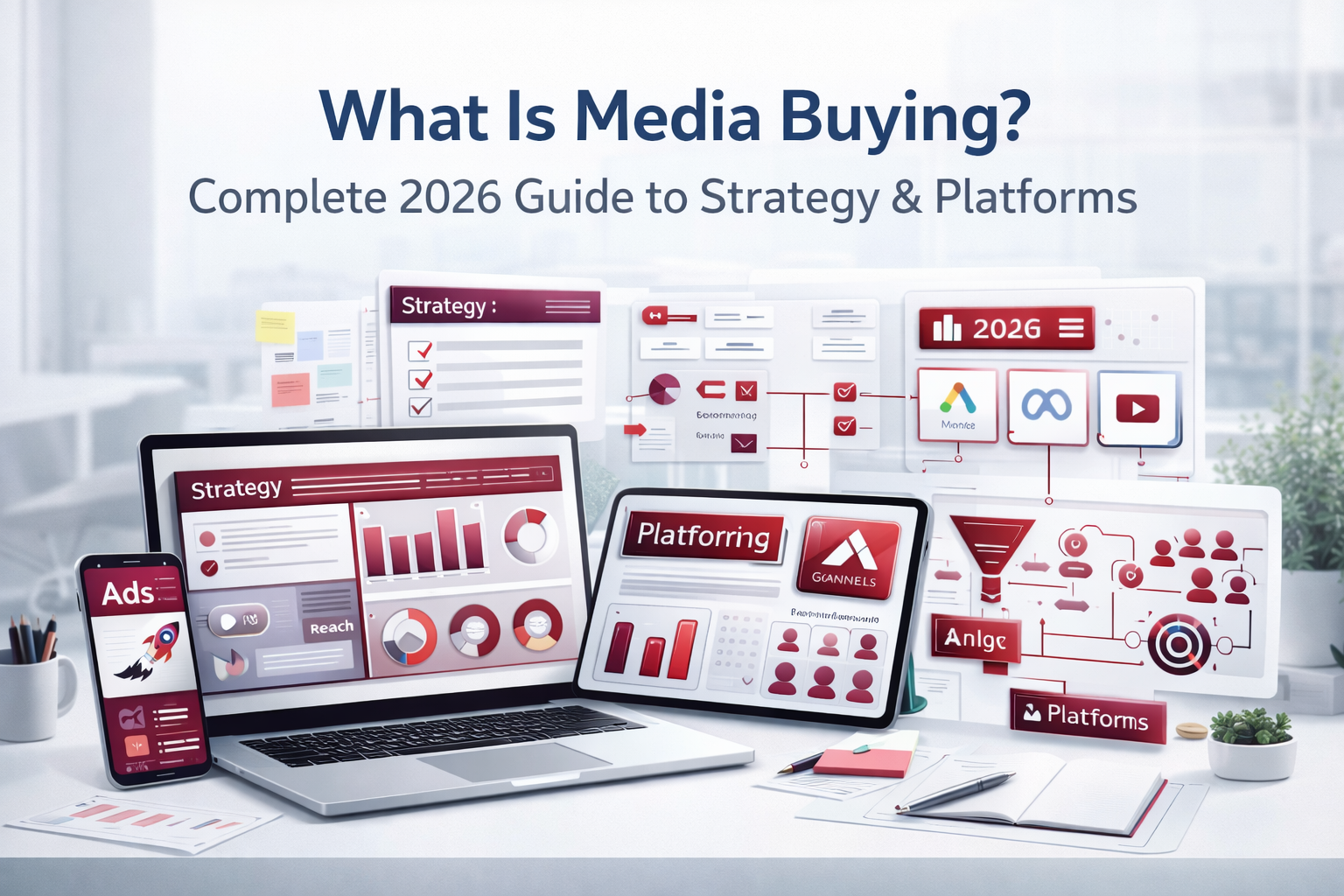
What Is Media Buying? Complete Guide for 2026
Your comprehensive guide to understanding media buying, how agencies work, and why it matters for your business.
Have you ever wondered why your favorite brands seem to follow you almost everywhere—on social media, on billboards, during your favorite podcasts, or even during your favorite TV shows that you watch regularly? You might be thinking this is inevitable or by chance. No, it's not like that, but it's the reason for very smart and strategic media planning. This is actually the power of very smart media planning to make sure that you see those brands regularly and, most importantly, at the right moment.
You must be thinking about what exactly is media buying, and what makes a media buying agency worth the investment?
Suppose you're a business owner searching for the right advertising options, or a marketing professional who wants to stay relevant in 2026, or simply someone curious about how advertising works in today's world. This guide explains media buying in a simple and easy-to-understand way.
Table of Contents
- What is Media Buying? (Media Buying Explained)
- Traditional vs. Digital Media Buying
- What Does a Media Buying Agency Do?
- The Media Buying Process: Step-by-Step
- Types of Media Buying
- How Much Does Media Buying Cost?
- Media Buying Best Practices for 2026
- Common Media Buying Mistakes to Avoid
- Should You Hire a Media Buying Agency?
- The Future of Media Buying
- Frequently Asked Questions
What is Media Buying? (Media Buying Explained)
In simple terms media buying means choosing and paying for advertising space across different platforms so your ads reach the right people. Think of it like real estate—you are not buying property but you're actually buying people's attention.
Media buyers are the people (or agencies) who figure out:
- Where your ads should appear
- When they should run
- How much you should pay
- Who should see them
- How to measure if they're actually working
Sounds very easy, right? But it is not that easy.
Nowadays you can see ads everywhere, on TV, websites, social media, streaming apps, podcasts and even on the digital screens on the road. With so many options, it's very natural to get confused.
An efficient and good media buyer actively helps you to choose the right spots. They make sure that your money is not wasted, they also make sure that your ads bring out solid outcomes for your business.
Traditional vs. Digital Media Buying: What's the Difference?
Traditional Media Buying
This also covers traditional, "old-school" channels that people still trust and use today, but many guys think that they're outdated:
Television
- Network TV, cable, local stations
- Still powerful for mass reach and brand building
- Negotiated through upfronts and scatter markets
- Measured through Nielsen ratings
Radio
- AM/FM stations and syndicated shows
- Great for local targeting and commuter reach
- Sold by dayparts (morning drive, afternoon, etc.)
- Measured through Arbitron ratings
- Newspapers and magazines
- Excellent for specific demographics and affluent audiences
- Sold by circulation numbers and ad placement
- Measured through readership studies
Out-of-Home (OOH)
- Billboards, transit ads, airport displays
- Impossible to skip or block
- Sold by location, traffic counts, and visibility
- Measured through traffic studies and foot traffic data
Digital Media Buying
In this place things get really interesting especially in 2026:
Display Advertising
- Banner ads across millions of websites
- Programmatic buying through automated platforms
- Targeting based on behavior, demographics, interests
- Real-time bidding and optimization
Social Media
- Facebook, Instagram, LinkedIn, TikTok, Twitter, and emerging platforms
- Hyper-targeted based on user profiles and behavior
- Self-service platforms with advanced targeting options
- Detailed performance tracking
Video Advertising
- YouTube, streaming platforms, connected TV
- In-stream, out-stream, and interactive formats
- Engagement-based pricing models
- Completion rate and viewability tracking
Search Advertising
- Google, Bing, and other search engines
- Intent-based targeting (people actively searching)
- Pay-per-click model
- Keyword-level performance tracking
Native Advertising
- Sponsored content that matches the platform's look and feel
- Higher engagement than traditional display ads
- Content recommendation platforms
- Measured by engagement and time spent
What Does a Media Buying Agency Do?
Here's where things get practical. Let's break down exactly what a media buying agency does and why businesses hire them instead of going it alone.
1. Strategic Media Planning
Before spending any money, a good media buying agency first focuses on well organized strategic planning:
- Audience Research: Understanding who your actual customers are, what they like, what they care about, and how they behave
- Competitive Analysis: Studying your competitors—where they're running ads, how much they're spending, and what messages they're using
- Channel Selection: Determining which combination of channels will bring out the best possible result for your specific goals
- Budget Allocation: Predicting which channels will bring the most impressive ROI and allocating budget accordingly
2. Negotiating Better Rates
This is where agencies truly prove their value. Media buying agencies handle large budgets and efficiently manage advertising for many clients, giving them serious negotiating power:
- Rate Cards vs. Reality: Agencies negotiate better deals, often getting 20–40% discounts or even more
- Added Value: Securing bonus placements, better ad positioning with additional perks
- Programmatic Access: Using private deals to buy better ad space at lower prices
- Upfront Commitments: Booking ad space in advance to get better prices
3. Campaign Setup and Execution
Once the strategy is set and the deals are finalized, agencies handle all the technical grunt work:
- Creative Trafficking: Ensuring ads meet technical standards for all platforms
- Pixel Implementation: Installing tracking codes to measure conversion rates
- Targeting Configuration: Setting up all targeting parameters
- Quality Assurance: Checking everything before ads go live
4. Active Campaign Management
This is where the real magic happens. Media buying needs constant attention:
- Daily Monitoring: Checking performance every single day
- Bid Adjustments: Increasing bids where ads perform well, decreasing where they don't
- Budget Pacing: Ensuring budget is evenly spent across the campaign period
- Audience Refinement: Focusing on audiences that respond best
- A/B Testing: Testing different ad creative, messaging, and targeting approaches
5. Performance Reporting and Insights
Transparency is very crucial. Good agencies provide:
- Regular Performance Reports: Weekly or monthly reports showing impacts, clicks, conversion rates, and costs
- Attribution Analysis: Understanding all the steps that helped a customer take action
- Competitive Intelligence: Knowing what competitors are doing
- Strategic Recommendations: Focusing on "what should we do next"
- Forecasting: Planning budget and setting realistic goals for the future
6. Emerging Channel Expertise
The media landscape evolves constantly. In 2026, agencies are staying ahead of:
- Connected TV (CTV) and OTT: Managing ads on streaming platforms
- Retail Media Networks: Amazon, Walmart, and Target ad platforms
- Podcast Advertising: Finding the right shows and tracking performance
- Influencer Coordination: Managing influencer partnerships
- Emerging Platforms: Testing new social apps and metaverse ads
The Media Buying Process: Step-by-Step
Let's walk through exactly how the media buying process works from start to finish.
Step 1: Discovery and Goal Setting (Week 1)
Questions Agencies Ask:
- What are you trying to achieve? (sales, leads, awareness, app installs, etc.)
- Who is your target customer?
- What's your budget?
- What's your timeline?
- What have you tried before?
- How do you measure success?
What Happens: The agency looks at your current marketing, checks your website and data, and studies your competitors.
Deliverable: A simple plan showing your goals, target audience, how to measure success, and suggested channels.
Step 2: Media Planning (Week 2)
The agency develops a comprehensive media plan:
Components Include:
- Recommended channel mix (e.g., 40% social, 30% display, 20% video, 10% search)
- Specific tactics within each channel
- Audience targeting strategies
- Budget allocation by channel and tactic
- Expected performance benchmarks
- Timeline and flight dates
What You'll See: A clear presentation explaining each recommendation, reach, frequency, estimated costs, and expected results.
Step 3: Negotiation and Buying (Week 2-3)
Once you say yes, the agency takes care of placing your ads.
For Traditional Media:
- Request for proposals (RFPs) sent to media vendors
- Rate negotiations based on volume and relationships
- Securing specific placements, times, and positions
- Finalizing insertion orders and contracts
For Digital Media:
- DSP account setup and configuration
- Private marketplace deal negotiations
- Platform account creation and linking
- Creative specifications and guidelines
Step 4: Campaign Setup (Week 3-4)
The technical heavy lifting happens:
Creative Preparation:
- Resizing and formatting ads for different placements
- Creating multiple versions for A/B testing
- Video encoding and optimization
- Landing page creation or optimization
Technical Implementation:
- Pixel and conversion tracking installation
- Campaign structure creation in platforms
- Audience list uploads and creation
- Bidding strategy configuration
- Budget and pacing settings
Quality Assurance:
- Test campaigns to verify tracking
- Creative rendering checks
- Link and conversion testing
- Final approvals and sign-offs
Step 5: Campaign Launch (Week 4)
Your campaigns go live:
Initial Monitoring: Agencies keep a close eye in the first day or two to catch any problems with tracking, budgets, ads, or targeting.
Early Adjustments: Agencies make small changes in the first few days—pause ads that aren't working, adjust bids, improve targeting, and try different creatives to get better results.
Step 6: Optimization Phase (Ongoing)
This is where experienced media buyers really shine:
- Week 1-2: Learning Phase – Ads run while agencies and systems gather data on what works. Only small changes are made so clear patterns can show.
- Week 3-4: Initial Optimization – Agencies make the first real changes based on results, like shifting budget, refining audiences, and testing new ads.
- Month 2+: Continuous Improvement – Keep improving by testing, reaching new audiences, updating ads, and adjusting strategy based on results.
What Gets Optimized:
- Bid strategies and amounts
- Audience segments and targeting
- Ad placements and websites
- Creative variations and messaging
- Landing pages and conversion paths
- Budget allocation across channels
- Dayparting and scheduling
- Geographic focus areas
Step 7: Reporting and Analysis (Weekly/Monthly)
Regular check-ins keep everyone aligned:
Weekly Reports:
- Performance snapshots
- Budget pacing updates
- Key metric trends
- Immediate issues or opportunities
Monthly Reports:
- Comprehensive performance review
- Goal achievement analysis
- Attribution insights
- Competitive intelligence
- Strategic recommendations
- Next month's plan
Types of Media Buying
Not all media buying works in the same way. Here are the key approaches:
Direct Buying
The Traditional Model: You or your agency deal directly with media owners.
How It Works: Reach out to a TV channel, newspaper, or website, agree on rates, and buy the ad spots you want.
Personal relationships with media reps
Specific placement control
Potential for added value and sponsorships
Simpler for local or niche media
Time-consuming and manual
Limited scale and efficiency
Harder to optimize in real-time
Requires many individual negotiations
Programmatic Buying
The modern approach: Automated platforms buy media in real-time by using algorithms.
How It Works: You tell the system who you want to reach, how much you can spend, and your bid. Then, whenever someone from your target audience visits a site, the system automatically tries to show your ad—super fast, in just milliseconds.
Types of Programmatic:
- Real-Time Bidding (RTB): Open auction for each impression
- Private Marketplace (PMP): Invitation-only auctions with premium publishers
- Programmatic Guaranteed: Reserved inventory at fixed prices via automation
Massive scale across millions of sites
Precision targeting capabilities
Real-time optimization
Complete transparency and data
Cost efficiency through automation
Less control over specific placements
Requires technical expertise
Can be complex to manage
Potential for ad fraud (though verification tools help)
Hybrid Approach
Most sophisticated advertisers use both:
- Direct buying for premium placements, sponsorships, and strategic partnerships
- Programmatic buying for scale, efficiency, and performance-driven tactics
This approach helps you to build your brand while also giving results that you can measure.
How Much Does Media Buying Cost?
This is the million-dollar question—sometimes literally.
Agency Fee Structures
- Percentage of Spend (Most Common): Agencies usually take 10-20% of your media budget. For example, if you spend $50,000 a month on ads, agency fees would be $5,000–$10,000.
- Flat Monthly Fee: For bigger accounts, agencies may charge a set monthly fee—usually $5,000–$50,000 or more—depending on the work involved.
- Hybrid Model: You pay a small base fee plus a percentage of your ad spend, so you get predictable costs while still rewarding good performance.
What's Included:
- Strategy development
- Media planning
- Buying and negotiation
- Campaign management
- Optimization
- Reporting and analysis
What's NOT Included:
- The actual media spend (that's additional)
- Creative production (unless specified)
- Landing page development
- Advanced analytics setup
Media Costs by Channel (2026 Benchmarks)
| Channel | Format/Type | Typical Cost Range |
|---|---|---|
| Television | National broadcast (primetime) | $100,000-$500,000 per 30-second spot |
| Local TV | $200-$1,500 per spot | |
| Cable | $50-$500 per spot | |
| Radio | National syndicated | $5,000-$20,000 per week |
| Major market | $200-$800 per spot | |
| Small market | $20-$200 per spot | |
| National magazine | $20,000-$300,000 per full-page ad | |
| Local newspaper | $500-$5,000 per full-page ad | |
| Digital Display | Open exchange | $1.50-$4.00 CPM |
| Premium programmatic | $5-$15 CPM | |
| Direct premium sites | $15-$50 CPM | |
| Social Media | Facebook/Instagram | $0.50-$3.00 CPC, $5-$15 CPM |
| $2-$6 CPC, $6-$20 CPM | ||
| TikTok | $1-$3 CPC, $10-$25 CPM | |
| Video | YouTube | $0.10-$0.30 CPV |
| Connected TV | $20-$40 CPM | |
| Premium video | $15-$35 CPM | |
| Search | Google Ads | $1-$50+ CPC (highly variable by keyword) |
| Bing Ads | $0.50-$30 CPC |
Media Buying Best Practices for 2026
Want to get the most from your media buying efforts? Follow these proven strategies:
1. Start with Clear, Measurable Goals
Don't just say "we want more sales." Become more specific:
- "Generate 500 qualified leads at under $50 CPA"
- "Increase brand awareness by 20% among women 25-45"
- "Drive 10,000 website visitors with 3% conversion rate"
Clear goals always help to bring out better strategy and accurate performance measurement.
2. Know Your Audience Deeply
Go beyond the basics and understand:
- What problems they're trying to solve
- What content they consume
- When they're most receptive to messages
- What motivates their purchase decisions
- Where they are in the buying journey
3. Test Before Scaling
Don't blow your entire budget immediately:
- Start with smaller tests across channels
- Identify what's working
- Scale investment into winners
- Cut or refine underperformers
4. Use Data to Drive Decisions
Ideas from your gut are good for brainstorming, but not for making ads better:
- Track everything with proper attribution
- Analyze performance regularly
- Let data inform budget allocation
- Test hypotheses systematically
- Share learnings across campaigns
5. Maintain Consistent Branding
Your audience sees ads across multiple channels:
- Keep visual identity consistent
- Maintain message coherence
- Use sequential messaging when possible
- Ensure landing page alignment
- Build recognition through repetition
6. Optimize Landing Pages
The best media buy in the world fails with a bad landing page:
- Match landing page to ad message
- Optimize for mobile (60%+ of traffic)
- Reduce friction in the conversion path
- A/B test page elements
- Ensure fast load times
7. Balance Short-Term and Long-Term
Don't sacrifice brand building for performance:
- Allocate 60-70% to performance (direct response)
- Reserve 30-40% for brand awareness
- Understand that brand campaigns support performance
- Track both immediate and delayed conversions
8. Stay Flexible and Adaptive
The market keeps changing constantly:
- Monitor competitive activity
- Test new channels and tactics
- Adapt to platform algorithm changes
- Respond to seasonal trends
- Pivot based on performance data
Common Media Buying Mistakes to Avoid
Learn from others' expensive errors:
You may like LinkedIn but that doesn't mean that your customers also like it. So let data and research decide where to advertise, don't depend on personal preference.
Media buying needs constant attention. If you leave campaigns alone, you waste money on ads that don't work and miss chances to boost the ones that do.
Paying $50 per click that leads to a sale is better than paying $1 per click that doesn't result in anything. The first brings real value, the second just wastes money.
In 2026, most traffic—about 60-70%—will come from mobile phones. If your ads and pages aren't mobile-friendly, most of your ad money will go to waste.
Even with perfect targeting, ads don't work if the creative is weak. Focus on good design, strong copy, and clear calls-to-action.
Using the same ad for months without testing new ideas hurts results. Regular testing helps improve performance.
Remember, media buying isn't magic. It takes time to see results, so give campaigns at least 30–60 days before deciding.
Should You Hire a Media Buying Agency?
Here's how to decide if working with an agency makes sense for your business:
When to Hire an Agency
You should consider an agency if:
- You spend over $10,000 a month on ads
- You don't have in-house media buying skills
- You're expanding to new channels or markets
- Your campaigns aren't performing
- You don't have time to manage ads daily
- You want better rates and placements
- You need advanced tracking and analytics
- You're ready to scale fast
When to Handle It In-House
You might be okay managing yourself if:
- Your monthly ad budget is under $5,000
- You're only using 1–2 basic platforms
- You have experienced marketers on your team
- You run simple campaigns
- You can manage and optimize ads daily
- You're fine with learning as you go through trial and error
Questions to Ask Potential Agencies
- What industries do you specialize in?
- What channels and platforms are you certified in?
- What's your fee structure and minimum commitment?
- How do you measure success?
- What reporting will I receive and how often?
- Who will be my main point of contact?
- What technology platforms do you use?
- Can you share case studies from similar businesses?
- How do you stay current with platform changes?
- What's your optimization process?
The Future of Media Buying: What's Coming
Media buying continues to evolve rapidly. Here's what's on the horizon:
Privacy-First Advertising
With cookies disappearing and privacy regulations tightening:
- First-party data becomes critical
- Contextual targeting makes a comeback
- Privacy-preserving technologies emerge
- Brands build direct customer relationships
AI and Automation
Artificial intelligence is transforming media buying:
- Predictive bidding algorithms
- Automated creative optimization
- Intelligent budget allocation
- Advanced audience modeling
- Anomaly detection and alerts
Retail Media Networks
Retailers are becoming major advertising platforms:
- Amazon, Walmart, Target, Kroger, CVS all offer advertising
- Access to purchase data enables precision targeting
- Closed-loop attribution from ad to sale
- Growing share of digital ad budgets
Connected TV Dominance
Linear TV declines as streaming grows:
- More inventory available programmatically
- Better targeting than traditional TV
- Measurement improving with digital attribution
- Brands shift budgets from linear to CTV
Cross-Channel Attribution
Understanding the full customer journey:
- Multi-touch attribution becomes standard
- Unified measurement across channels
- Better understanding of assists and influence
- Data-driven budget allocation
Ready to Improve Your Media Buying?
Want better results from your ads? We can help. Our team has handled over $50 million in ad spend and knows what works.
Free media buying audit: We'll check your ads, find opportunities, and show where money is being wasted.
Frequently Asked Questions
Media planning is the strategy—choosing channels, target audiences, and how to spend your budget. Media buying is putting that plan into action—buying ad space, negotiating rates, and running campaigns. Most agencies handle both.
Yes you can buy media yourself, especially for simple digital campaigns on platforms such as Facebook or Google Ads. But good agencies bring negotiating power, cross-platform expertise, and optimization experience that often justify their fees through better performance and lower rates.
Most agencies ask for 3–6 month contracts so there's enough time to plan, optimize, and see real results. Month-to-month options exist but usually cost more.
Look for an agency that shares clear reports, keeps you updated, tests and improves constantly, hits agreed goals, and explains their choices in simple terms.
CPM (Cost Per Thousand Impressions) – You pay for every 1,000 times your ad is seen.
CPC (Cost Per Click) – You pay only when someone clicks your ad.
CPA (Cost Per Acquisition) – You pay when someone completes a specific action, like a purchase or signup.
Pick the model that fits your goal.
Final Thoughts: Making Media Buying Work for Your Business
Media buying in 2026 is powerful but complex. Targeting, measurement, and optimization are easier than ever—but managing them well takes skill.
A media buying agency brings strategy, expertise, and daily optimization to make your ads work harder.
The brands that win aren't always spending the most—they're spending smarter, targeting better, and improving continuously.
Keywords: media buying agency, what does a media buying agency do, media buying explained, media buying process, how media buying works, types of media buying, programmatic media buying, digital media buying, traditional media buying
Word Count: 5,800 words | Reading Time: ~22 minutes | Last Updated: February 2026
Want to dive deeper into specific aspects of media buying? Check out our related guides:
- • The Complete Guide to Programmatic Advertising
- • Digital Media Buying vs Traditional: Which is Right for You?
- • How to Choose the Right Media Buying Agency
- • Media Buying Metrics That Actually Matter
Author

priyadarshini.riyo@gmail.com
Related Posts

Public Notice Advertisement in Deccan Herald Bangalore
Public notice advertisement in Deccan Herald Bangalore Table of Contents What Is a Public Notice Advertisement? Reasons to Publish in Bangalore What...
Read out all
Riyo Advertising Completes 22 Years: A New Chapter Begins in Mumbai
22 Years Completed. The Next Chapter Begins for Riyo Advertising in Mumbai +91 9821984000 Visit Website Email Us Table of Contents Introduction...
Read out all
Why Stability Wins in Marketing: Riyo Advertising’s Longevity in Mumbai
Why Stability Wins in Marketing: The Riyo Advertising Perspective on Longevity in Mumbai +91 9821984000 Visit Website Email Us Table of Contents...
Read out all
Advertising with Integrity Riyo Advertising’s 22-Year Legacy in Mumbai
Advertising with Integrity: The Values That Defined Riyo Advertising’s 22 Years in Mumbai +91 9821984000 Visit Website Email Us Table of Contents...
Read out all
How Riyo Advertising Adapted from Print to Digital Marketing in Mumbai
Adapting Without Losing Identity: How Riyo Advertising Navigated Industry Change from Print to Digital Marketing in Mumbai +91 9821984000 Visit Website Email...
Read out all
Riyo Advertising: Building Institutional Trust & Partnerships
Institutional Trust: How Riyo Became a Long-Term Marketing Partner +91 9821984000 Visit Website Email Us Table of Contents Introduction Foundations of Institutional...
Read out all